- Sep 15, 2024
ROI v. Value In Customer Success: What's The Big Freakin Difference?
- Diana De Jesus
In the post-sale world, we are obsessed with the term “ROI” (Return On Investment).
We’re fueled by being able to demonstrate the ROI to our clients, and some of us even go as far as to equate our success to their ROI.
In the past, I’ve mentioned collecting over 400 data points on what’s holding post-sales (mainly customer success) professionals back from being strategic, and on that list was “not knowing how to identify and/or articulate ROI”.
But over the years, I’ve noticed that in customer success, we often use the terms“ROI” and “value” interchangeably. While both share similarities, they are not the same!
Both are critical to any business and in our post-sales roles, knowing the difference and when to leverage one over the other can help us become more strategic and effective.
In this post, we’ll cover how to tell them apart and learn tips to help you decide which one to implement in your strategy. Let’s dive in!
ROI v. Value: The Difference & When To Use Which
So why should knowing the difference matter to you?
As a post-sale professional, understanding the difference between ROI and value sets you up to have more meaningful (and impactful) conversations and achieve outcomes with your clients while also contributing to the company's long-term success by helping define a stronger value proposition.
Let’s look at the difference between ROI and value next.
Return On Investment
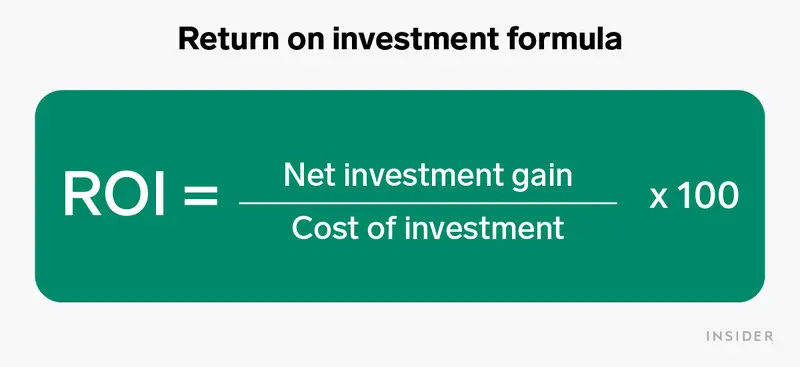
ROI (Return on Investment) is a specific metric that calculates the financial benefit of an investment, in this case, your product. It expresses the value as a percentage of the cost:
While ROI is important, customer success professionals, in particular, often struggle with it because:
Value is multifaceted. Capturing all aspects of value in a single number is difficult, especially for companies that offer multiple products/services.
Intangibles are hard to quantify: There’s no easy way to calculate “improved employee morale” or “brand perception”. It can’t be plugged into a formula.
Focus on short-term results: ROI often looks at immediate financial gains, while value can build over time. In SaaS (Software as a Service), a long onboarding process may delay the financial gains and, therefore, paint a negative picture related to ROI.
Software like Slack can be challenging to calculate traditional ROI, especially for the whole organization. This is because its value lies in increased efficiency, which can be harder to quantify in a single dollar figure.
However, when you look at specific teams like Sales, the value becomes clearer! Faster communication through Slack can lead to:
Faster deal closures: Sales reps can reach out to colleagues, share information, and get approvals quicker.
Increased win rates: With better communication and collaboration, sales teams can present more effective pitches and close deals faster.
Despite being unable to communicate ROI on a company level, there is an opportunity to identify team-specific ROI.
Value
Value is a broader concept. It encompasses all the positive outcomes a customer experiences from using your product. This can be:
Increased revenue: This is a core value for many businesses, but it's not the only one.
Cost savings: Your product might help them save on resources or prevent problems.
Improved efficiency: Streamlining processes creates time and cost benefits.
Enhanced productivity: Tools that empower employees to do more and contribute to value.
Stronger customer satisfaction: Happy customers lead to repeat business and referrals.
Brand reputation boost: Positive experiences can elevate how customers perceive your brand.
One of the most important topics I cover with my students is recognizing the value proposition of their company. It usually sits within one of these categories:
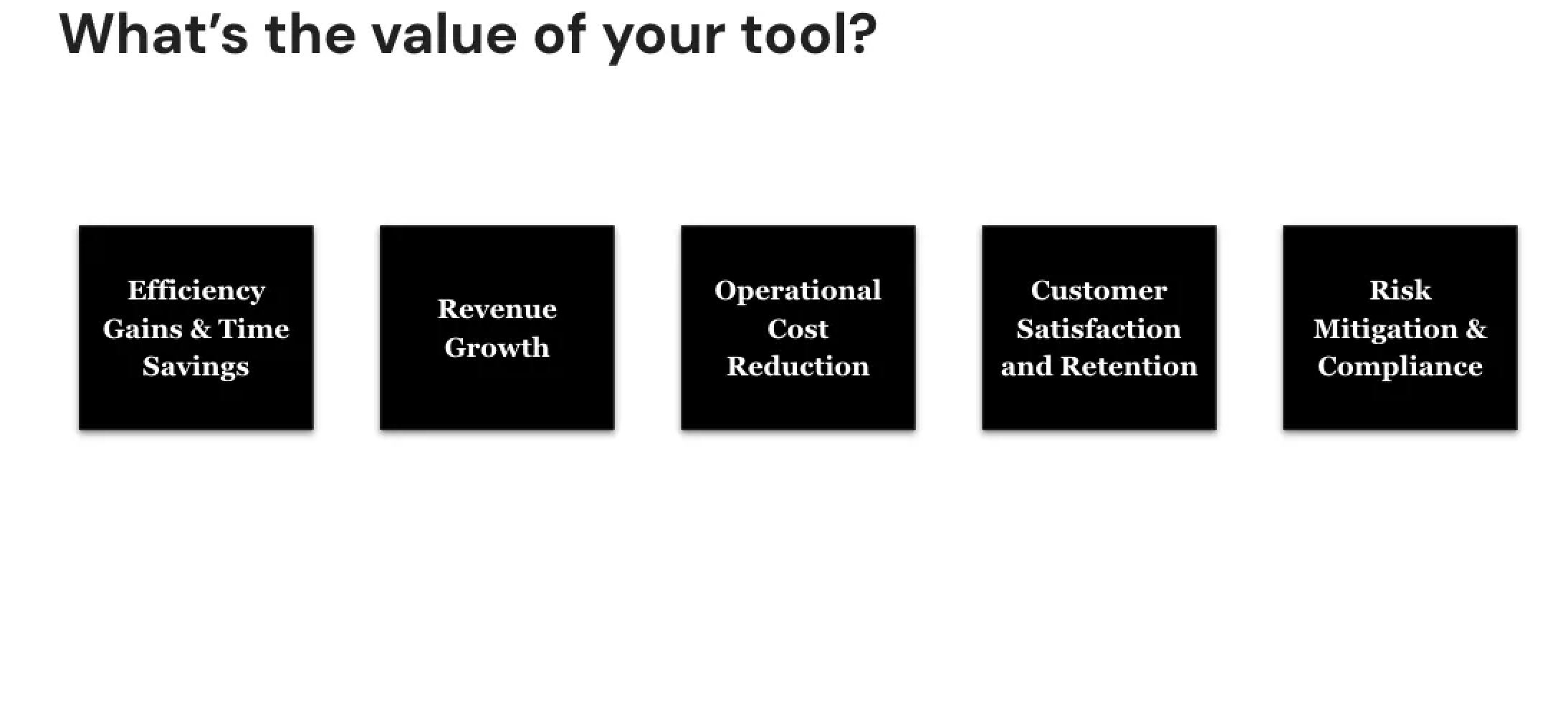
If you’re not sure where your tool/company stands, I recommend having a wider internal discussion so that you and the rest of the company are all on the same page when it comes to value. I’m a firm believer that a company's value proposition should not be defined by an individual contributor (like a CSM). It should’ve been defined by leadership (founders) and shared with the rest of the company for alignment and refinement.
Communicating ROI vs. Value
For customer success professionals, the challenge often lies in communicating the appropriate concept to the right audience:
ROI is critical when talking to Buyers! CFOs and finance departments prioritize data-driven decision-making. When engaging with these stakeholders, emphasize the quantifiable financial benefits your product delivers. Demonstrate ROI through clear metrics, cost-savings calculations, or projected revenue increases. This data-centric approach resonates with those focused on the bottom line.
Value is more suited for your Deciders! For broader discussions with stakeholders like CTOs or department heads, focus on value. Value encompasses the product's wider impact on operational efficiency, strategic goals, and long-term success. Highlight how your solution addresses their specific challenges, improves workflows, and promotes innovation.
When ROI Isn’t Clear
If a product's direct financial benefits aren’t immediately apparent, focus on value to paint a holistic picture. Here's how to shift the focus to value articulation:
Identify Customer Goals: Understand what your customers are trying to achieve and their measure of success (if you can get quantifiable metrics, you’re winning 😎). Once you’re clear on their goals, this will be the base to help you communicate the value.
Targeted Communication: Tailor your message to each audience. Speak the language of decision-makers (ROI) and address the broader goals of operational leaders (value).
Quantify the quantifiable: Support your claims with relevant data and metrics whenever possible. Quantifiable evidence strengthens both ROI and value arguments. This is also where relevant customer stories that demonstrate measure results can build credibility.
Focus On Long-Term Impact: Show how your product creates a foundation for sustained success, going beyond immediate financial gains.
Seeing It In Action
Let’s pretend we’re a Customer Success Manager looking to use the above strategies to effectively articulate the value of a social media management tool. Here’s what each strategy would look like:
Identify Customer Goals
The first step is uncovering the boutique's social media aspirations. What are their key objectives? Are they looking to heighten brand awareness (increased follower growth)? Drive traffic to their online store (website click-through rates)? Or maybe boost customer engagement (social media interaction rates)?
Ideally, quantifiable metrics like these would be available to establish a baseline and measure progress. Understanding their goals helps you communicate the value proposition more clearly.
Targeted Communication (Tailoring the Message for Different Stakeholders)
CFO/Finance: Here, speak the language of ROI. Focus on how the tool generates revenue. Present data showcasing similar boutiques that significantly increased online sales (X%) after using the platform's targeted advertising features. This data-driven approach resonates with their financial priorities.
Marketing/Social Media Manager: Now, shift gears and emphasize value. Explain how the tool streamlines content creation and scheduling, saving them precious time. Highlight features that assist in curating engaging content, leading to a rise in follower growth and brand recognition.
Quantify the Quantifiable
Don't just talk benefits – back them up with data!
Share testimonials from businesses (that may look/sound like them) that achieved measurable success with the tool. For instance, a clothing store might have tripled its Instagram engagement rate after using the platform's analytics to optimize its content calendar. Real-world examples with quantifiable results build trust and showcase the product's impact beyond just anecdotes and general recommendations.
Focus on Long-Term Impact
The impact goes beyond immediate sales increases. Discuss how the tool fosters stronger customer relationships. Regular social media engagement builds brand loyalty, leading to repeat customers and positive word-of-mouth promotion. This, in turn, fuels long-term sustainable success that goes way beyond short-term sales spikes.
In essence, while ROI is about "numbers," value is about "narrative." Both are important and customer success teams that can explain both clearly are much more effective.
Can it be measured?
Is there an ROI on knowing the difference between ROI and value? No. There isn’t a tangible, numerical way to measure this.
But can you see value over time in knowing the difference between both and when to leverage one over the other? Yes, and that’s tied to your wider customer success goals like retention, relationships, and adoption.
Newsletter
Weekly Newsletter With Actionable Insights
Gain the skills, knowledge, and confidence to succeed in Customer Success & Account Management: 0% theories, 100% actionable insights.